


Egypt - Papers And Lectures
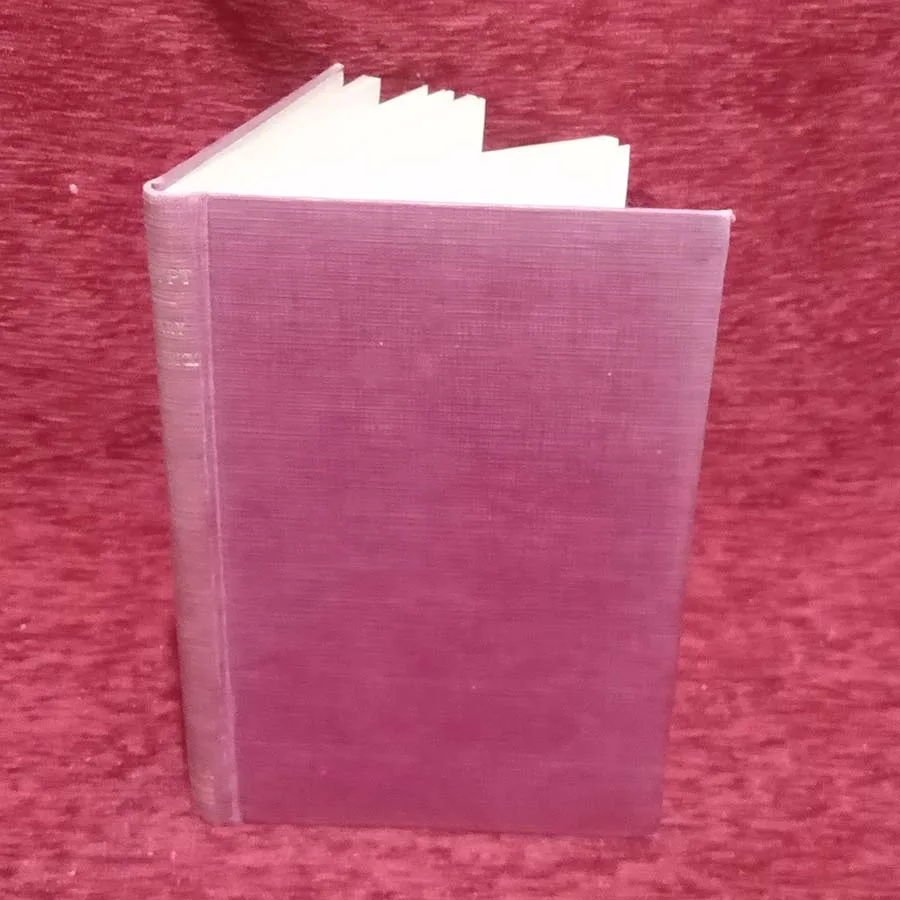
Publisher: Alexander Moring
Format: Hardback
ISBN: none
Ah, Egypt (1938) by Mary Brodrick — a book that arrives from a time when the Nile flowed not only through sand and civilisation, but also through a particularly British confidence that everything, with sufficient footnotes and a firm tone, could be neatly explained.
Brodrick, an Egyptologist of no small repute, sets out to do what many before and after have attempted: summarise several thousand years of baffling, monumental, occasionally divine human activity into something one might reasonably consume between tea and a slightly overambitious dinner. The pyramids rise, the dynasties fall, gods appear with alarming frequency, and through it all Brodrick marches on with admirable clarity, as though ancient Egypt were simply waiting for a tidy Edwardian mind to put it in order.
There is something wonderfully earnest about the whole affair. This is Egypt before package holidays and Instagram sunsets, before the Valley of the Kings had a visitor centre, before Tutankhamun had been entirely monetised. Instead, we are given a world of sand, scholarship, and a certain quiet awe—albeit filtered through the sensibilities of 1938, when the past was both distant and, in a curious way, still under polite British supervision.
Naturally, the tone is one of authority. Hieroglyphs are decoded with brisk assurance, pharaohs are introduced like slightly eccentric relatives, and entire epochs are summarised with the sort of efficiency that suggests Cleopatra herself might have appreciated a more detailed briefing. Yet beneath this composure lies a genuine fascination—a sense that Egypt is not merely ancient, but stubbornly alive, resisting complete explanation even as Brodrick gives it her very best attempt.
As a physical object, this 1938 Alexander Moring edition sits comfortably in that reassuring middle ground of “Good” condition: well-handled, perhaps, but still dignified—rather like an ageing archaeologist who has seen a few tombs and is not inclined to make a fuss about it. One imagines it has spent decades on a shelf, quietly outlasting more fashionable interpretations, waiting patiently for a reader willing to revisit a time when history was written with both confidence and a fountain pen.
In short, Egypt is less a guidebook and more a conversation across time: part scholarship, part period piece, and entirely convinced that the mysteries of the ancient world can, if not be solved, at least be presented in a manner that feels reassuringly comprehensible. Whether you read it for the history, the prose, or the gentle irony of its certainty, it offers a journey not just to Egypt, but to the way we once thought about Egypt—and perhaps, in some ways, still do.
Keep browsing: See more History books Other books by Mary Brodrick
